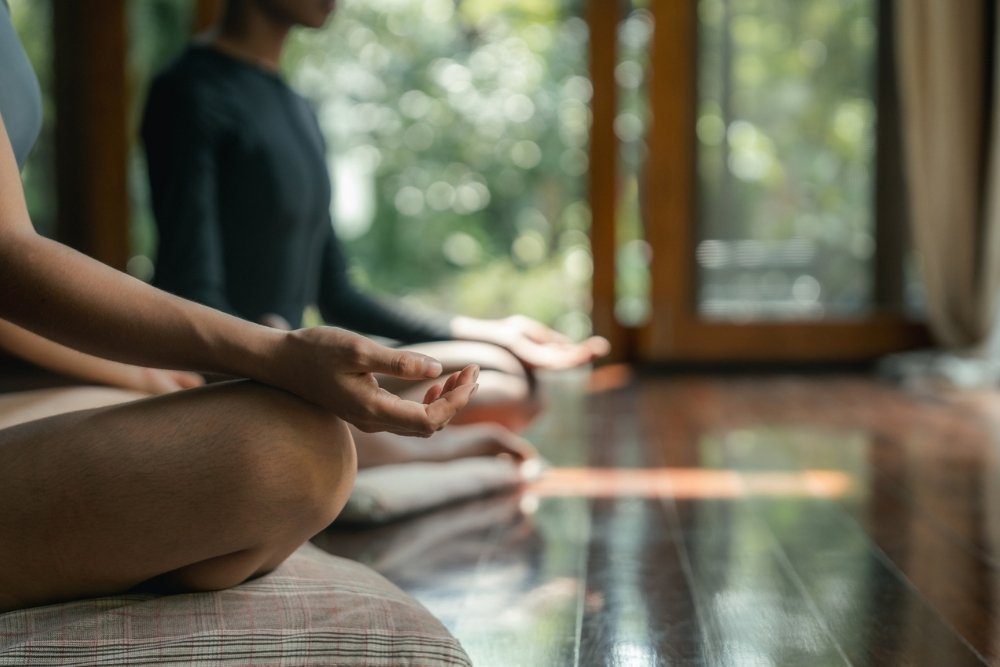
Meditation is often described as a way of training the mind, much like exercise trains the body. At its core, it involves intentionally focusing attention, slowing mental reactivity, and developing greater awareness of thoughts, emotions, and bodily sensations. The National Center for Complementary and Integrative Health indicates that regular meditation practice may help reduce stress, improve emotional regulation, support sleep, and strengthen coping skills for anxiety, depression, and substance use recovery.
If you’re managing alcohol use disorder (AUD) or substance use disorder (SUD), meditation can be especially helpful because it strengthens the ability to notice cravings or difficult emotions without immediately reacting to them.
It’s important to note that there’s no single “right” way to meditate. Different styles offer varying entry points depending on your personality, emotional needs, and comfort level. Below are several accessible types to explore.
What Is Mindfulness Meditation and Why Is It So Popular?
Mindfulness meditation involves paying attention to the present moment without judgment. You might focus on your breath, bodily sensations, or sounds around you while gently bringing your attention back whenever the mind wanders.
Mindfulness-based approaches are some of the most widely researched forms of meditation and are often used in clinical programs for anxiety, depression, and addiction recovery. They help you create space between thoughts and reactions, which can be especially useful during cravings or emotional distress. Many people new to the concept of meditation start with mindfulness practices because they only require attention and consistency.
What Is Walking Meditation and Why Might It Work for Restless Minds?
This style is helpful for people who find sitting still difficult or uncomfortable. By combining movement with awareness, you integrate mindfulness more naturally into daily life, which might be more practical for busy routines.
However, instead of rushing from point A to point B, you direct your attention to each step, the sensation of your feet touching the ground, heel-to-toe, and the rhythm of movement. Ideally, you’ll practice outside to take advantage of the healing power of nature, but a long hallway or even moving in a slow circle works, too. The Greater Good Science Center provides this tutorial.
How Can Breath Awareness Meditation Help During Cravings or Anxiety?
Focused breathing techniques involve directing your attention to the natural rhythm of your inhale, exhale, and pauses in between. This is one of the simplest and most accessible forms of meditation. It’s often used as a grounding tool in recovery because the breath is always available as an anchor during moments of stress or craving.
Even a few minutes of breath-centered attention helps slow down impulsive reactions and restore a sense of control.
How Does Body Scan Meditation Help You Reconnect?
This method involves slowly creating awareness of different parts of your body, often starting from the feet and moving upward. You notice sensations like tension, warmth, or relaxation without trying to change them.
This style is helpful for people who feel disconnected from their bodies due to stress, trauma, or substance use. It can also promote relaxation and improve sleep by reducing physical tension. It’s commonly included in mindfulness-based stress reduction programs used in healthcare settings. Review this script from the U.S. Department of Veterans Affairs or follow this guided session from Headspace.
Can Loving-Kindness Meditation Improve Emotional Wellbeing?
Sometimes called metta, this approach focuses on cultivating compassion—for yourself, loved ones, and even people you find difficult. You silently repeat phrases such as “May I be safe” or “May others be well,” gradually expanding the circle of compassion.
This practice may feel especially meaningful in recovery, when negative self-talk, shame, and criticism are common. It helps shift attention from self-judgment toward self-acceptance and emotional warmth. Research suggests compassion-based meditation can support emotional balance and reduce stress responses over time. Give it a try.
How Does Visualization Meditation Support Mental Health?
Imagining calming or positive mental images—such as a peaceful beach, a safe place, or a healing light around the body—helps many people reduce anxiety by giving their minds a structured, comforting focus. It’s often used in therapy settings to support relaxation, emotional regulation, and stress reduction. If you’re managing SUD or AUD, visualization can also reinforce goals, such as imagining a healthy, stable future. Positive Psychology offers these practice modules.
What’s Mantra Meditation and Why Do People Use It?
A common misconception about meditation is that you must achieve absolute stillness. While not true, it’s often easy to get distracted by various thoughts. So, silently or audibly repeating a word, phrase, or sound helps anchor your attention and reduce mental distraction. People often choose mantras that feel meaningful, such as “calm,” “peace,” or “I am safe.”
This method can be especially helpful for individuals who experience intrusive thoughts or mental overwhelm, offering a steady rhythm to return to. The Calm app explains how you might practice it.
Can Movement-Based Meditation Support Recovery?
Yoga or gentle stretching combines activity with breath and attention. It supports stress reduction and emotional regulation by engaging both physical and mental awareness at the same time. This approach is particularly supportive when you’re in recovery for substance use or trauma because it helps rebuild the mind-body connection in a safe, controlled way.
Find More Holistic Care at Fair Oaks
The most effective meditation style is often the one you are willing to practice consistently. Many people start with breath awareness or mindfulness meditation, then gradually explore other forms as their comfort grows.
At Fair Oaks Recovery Center in Sacramento, California, we’re an inclusive, licensed Chemical Dependency Recovery Hospital—a status issued by the California Department of Public Health to addiction rehabilitation and dual diagnosis/mood disorder treatment facilities. Our board-certified medical professionals want to make sure your evidence-based treatment includes numerous holistic resources to support your long-term recovery. Talk to our admissions team to learn more about the practices we offer.